
Designing a Kitchen That Works: Layout, Storage, and Pantry Ideas
Kitchens are the heart of the home. This space sees the most activity throughout the day—not just for cooking and eating, but for socializing, working, and spending time together as a family.
But kitchens can also be the source of a lot of frustration. A lack of storage, awkward layouts, and a flow that doesn’t support modern living can make even the nicest kitchen feel difficult to use.
I’m not talking about trends or what’s “in” right now. I’m talking about kitchens that function well now and in the future—spaces that truly stand the test of time.
Start with Function, Not Finishes:
It doesn’t matter how beautiful a kitchen looks if it doesn’t function properly. Creating a layout that works for you and your home should always be the first step.
A simple way to approach this is by thinking in zones—prepping, cooking, cleaning, and serving. This helps you understand how you (and others) move through and use the space.
When you break your kitchen into zones, you can start to see patterns in movement. This is where layout really starts to matter. You want enough counter space where it’s needed, and you want your key areas close enough to move between easily.
This is also where the idea of a work triangle comes in—the relationship between your sink, fridge, and stove. The goal isn’t perfection, but efficiency. You want everything within a few steps of each other while still allowing enough room for one—or multiple—people to move comfortably through the space.
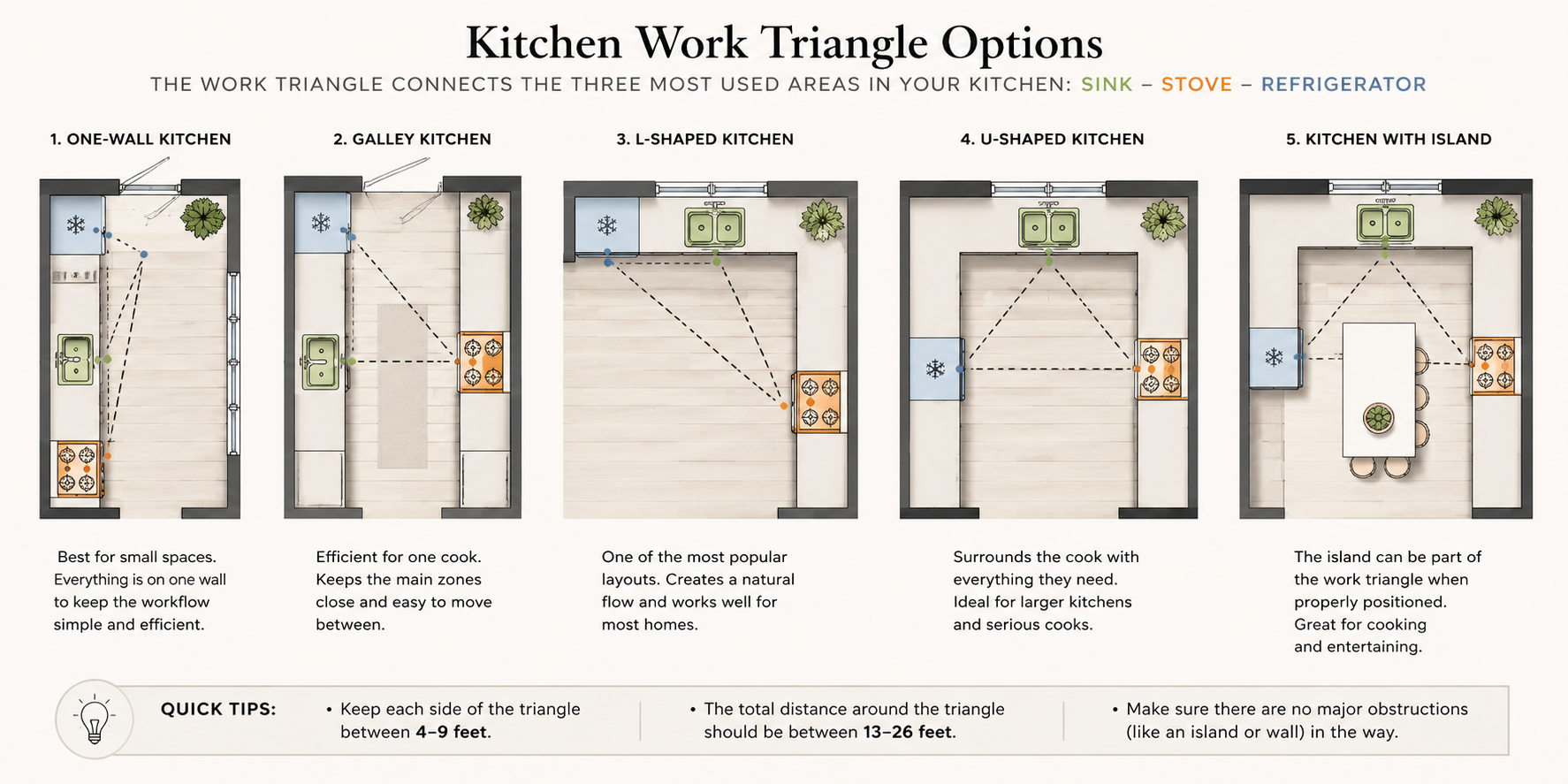
Zoning Your Kitchen:
Within each main zone—prepping, cooking, cleaning—there are smaller groupings that make a big difference in how your kitchen functions.
For example, in your cooking zone, you might group together:
spices
cooking oils
utensils
You’ll also want your pots, pans, and everyday cooking tools stored close to the stove.
Some popular “extra” zones include coffee stations or bar areas. These can be great for entertaining, as they help reduce traffic through the main kitchen workspace.
Adding plumbing to a coffee bar or bar area can make the space more self-sufficient, but this typically falls into the “nice-to-have” category rather than a must-have.
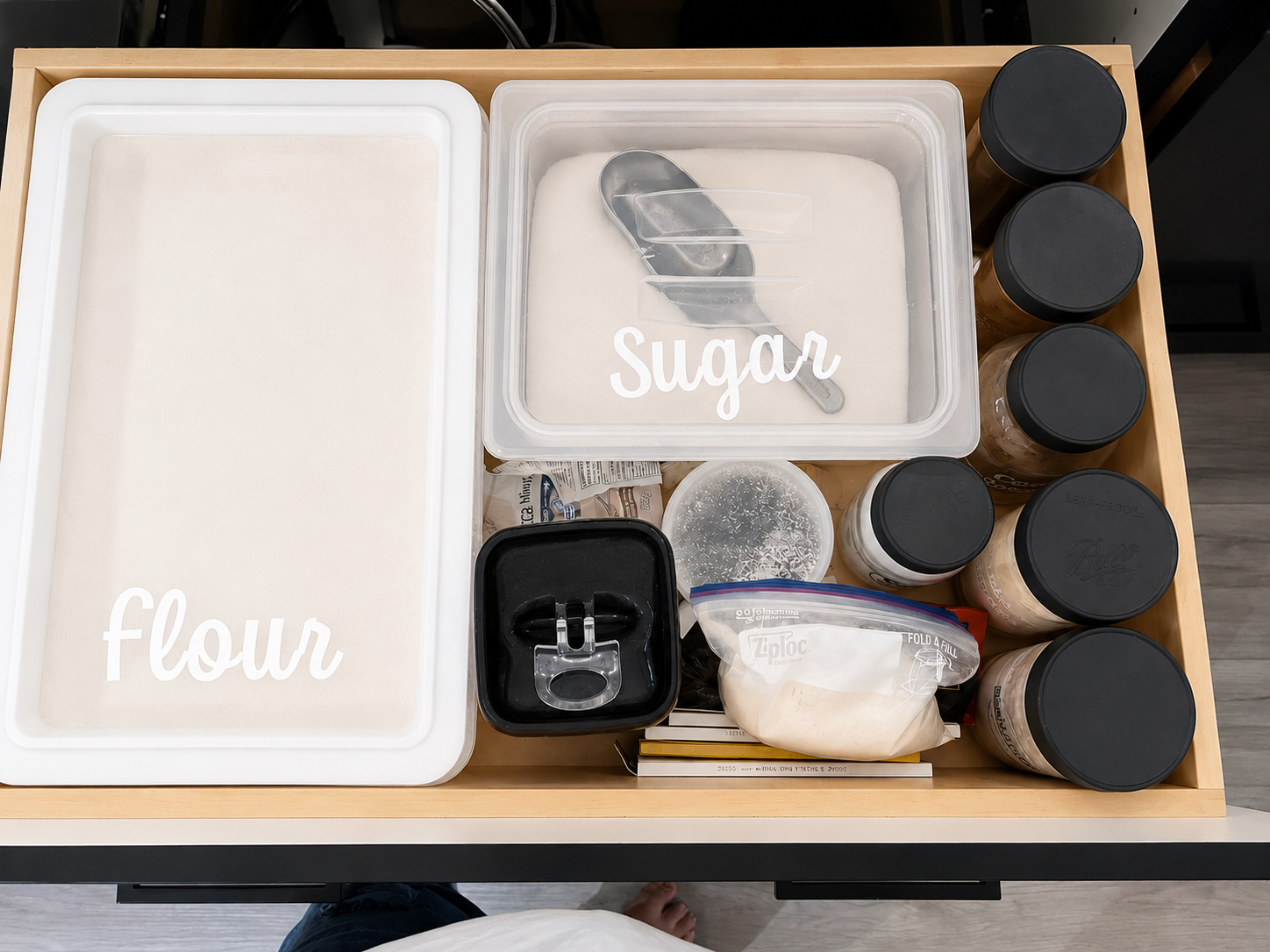
Storage That Actually Makes a Difference:
There are so many storage options available, and while they all look great, they can add up quickly when it comes to budget.
Let’s break down a few of the most impactful ones.
Drawers are often a better solution than lower cabinets. They allow you to see everything at once without having to get down on the floor or dig through the back of a cabinet.
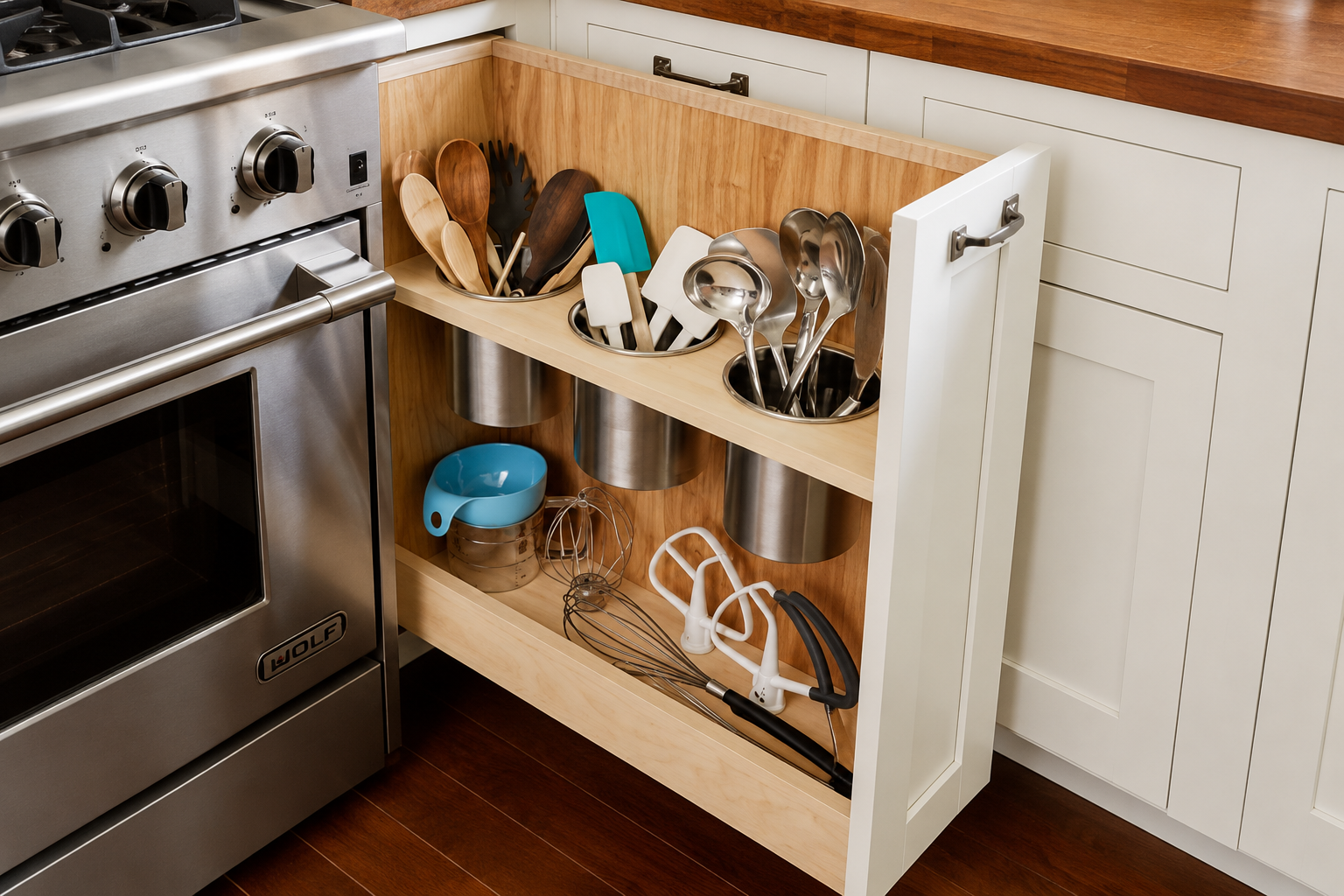
Spice and oil pull-outs—those narrow cabinets typically placed beside the stove—are very popular. While they can work well for some people, they do have limitations. You’re often looking at the tops of bottles rather than the labels, taller items can be harder to access, and things can shift or tip over if not organized carefully.
An alternative is a spice drawer, where everything is laid out and visible at a glance, making it much easier to find what you need while cooking.
Other functional storage solutions include:
appliance garages (either countertop or full-height towers)
pull-out garbage and recycling
utensil pull-outs (to eliminate countertop clutter)
vertical dividers for baking trays and cutting boards
There are so many great options, but the key is choosing what works best for your lifestyle and priorities—not just what looks good in a showroom.
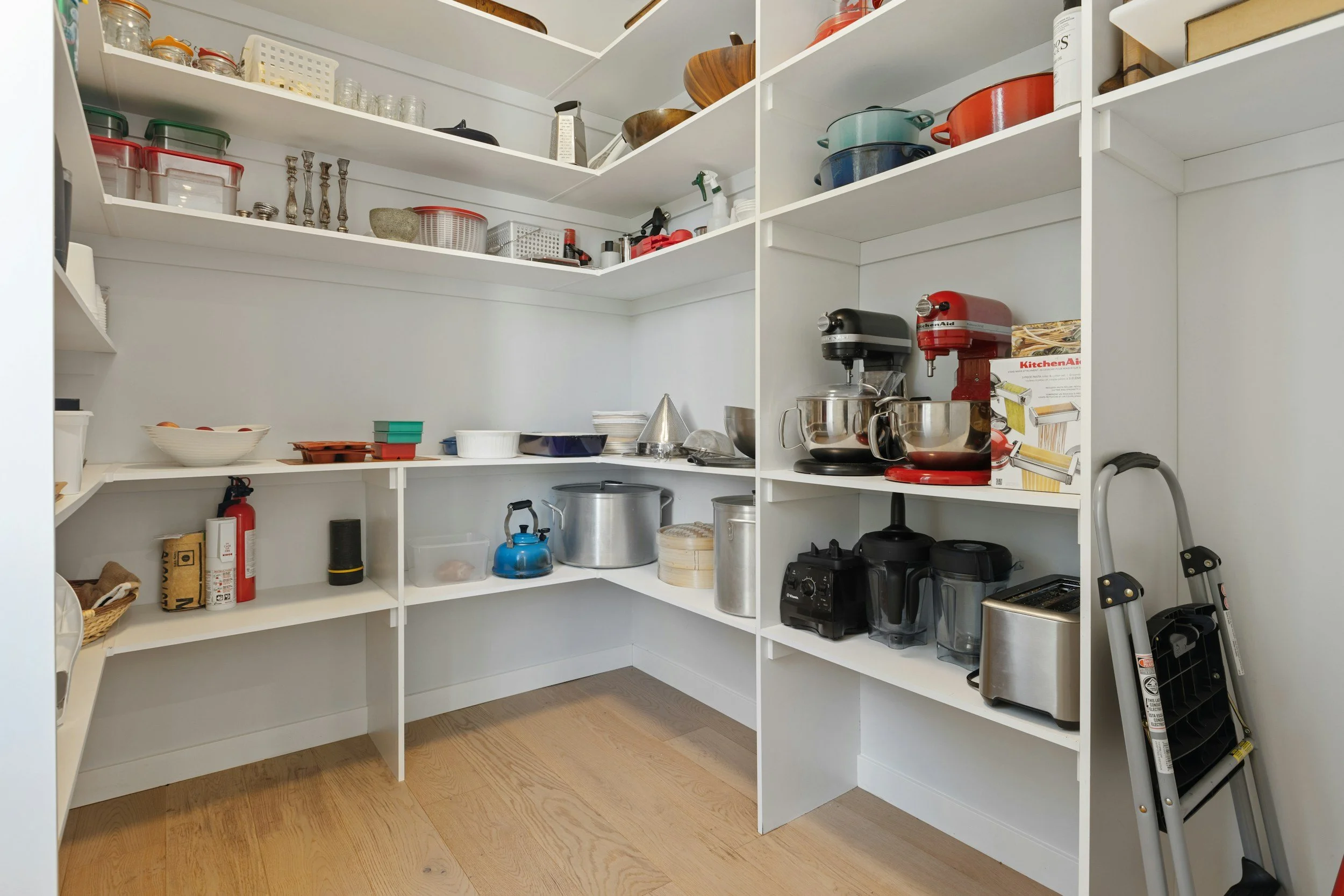
Pantries:
Pantries are one of those features that function as both a zone and a storage solution.
Depending on your space, you may have a walk-in pantry or full-height pantry cabinets—and both can work really well when designed intentionally.
The key is creating simple zones within the pantry so everything has a place. For example:
dry goods (pasta, rice, canned items)
snacks or everyday items
small appliances or bulk storage
This makes it easier to find what you need quickly and keeps things from turning into a cluttered catch-all over time.
Shelf depth also plays a bigger role than most people realize. Standard 24" deep pantry shelves might seem like a good idea, but they’re often less efficient—things get pushed to the back and forgotten.
A shallower depth, like 18", makes it much easier to see everything at a glance and actually use what you have.
If you’re working with deeper cabinets, adding pull-out shelves or drawers can make a huge difference by bringing everything forward so you’re not digging around.
A pantry doesn’t need to be large to work well—it just needs to be thought through.
At the end of the day, your kitchen should be functional, organized, and beautiful.
Taking items off the counter and storing them intentionally helps reduce visual clutter, while thoughtful layout and storage decisions make everyday tasks easier.
When you combine functionality with cohesive, durable materials, you create a space that not only works well—but is a place you truly enjoy being in.
Overwhelmed by the thought of renovating? You’re not alone.
Grab the free Renovation Planning Guide and map your next three moves today.
If you’re mid‑project and second‑guessing decisions, I also offer one‑on‑one sessions to review plans and prevent costly rework.